Mark Sutton/Formula 1 via Getty Images
From here to uncertainty: Ready or not, F1’s brave new world of 2026 has arrived
We’re just past the second month of the year, and already Formula 1 feels like it has been through a significant amount of inner turmoil.
This is a sport that’s good at it, after all.
While there were a significant number of downsides to having not been in the paddock during pre-season testing over the past few weeks, there was an unexpected upside as I was that little bit further outside the echo chamber that it can become, with drivers and team members bemoaning certain aspects of the new regulations that they don’t like, and the line of questioning in each press session almost becoming negative by default. It’s easy to see how it happens – the paddock is full of people who care deeply about F1 and want to see it succeed, but the fear that something might not be perfect means it’s the potential problems that are focused on.
And the bit that can be tough for us all to remember in the immediacy of what is happening during pre-season testing is the fact that it is just that – testing. It’s a time for teams and drivers to start truly learning about the machinery they have at their disposal, and for systems or solutions to be practiced where required.
In the case of many of the drivers, it was quite clear that having to try different approaches – including some severe downshifting to increase revs, or deal with the power unit no longer accelerating anywhere near its full potential – was not enjoyable or intuitive. And it certainly shouldn’t be the norm.
But watch Charles Leclerc’s onboard of his fastest lap of pre-season, and you’ll see a car that is operating in a far more normal way than it was on its first day on track in Bahrain, let alone its debut proper run in Barcelona.
The evolution was significant, and will continue to be through the year. But that doesn’t mean there weren’t clear signs of potential areas that could be improved through changes to the regulations.
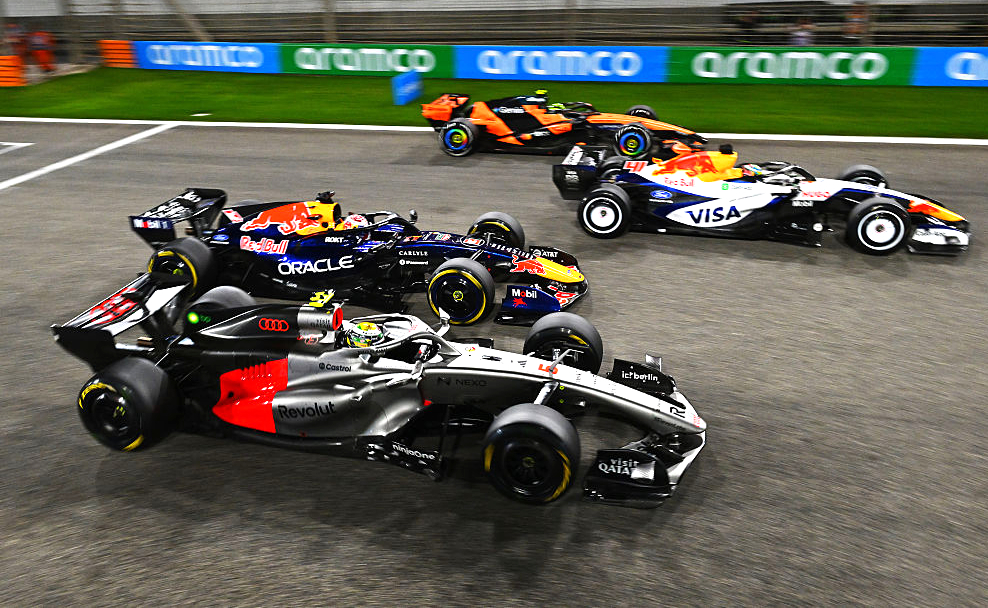
One such adaptation was seen during the second week of testing when the FIA trialed a new start procedure in order to allow drivers more time to spool the turbo ahead of their launches. Flashing a pre-start warning to the cars lined up on the grid provided a window for the drivers to build the revs earlier than usual before the five lights come on, and yet if you were watching from a head-on camera you saw nothing different (save for a slight delay in the first red light illuminating).
Simple, effective, and every chance of being introduced as a “new” starting procedure that will make absolutely no difference whatsoever to a fan watching on television or trackside.
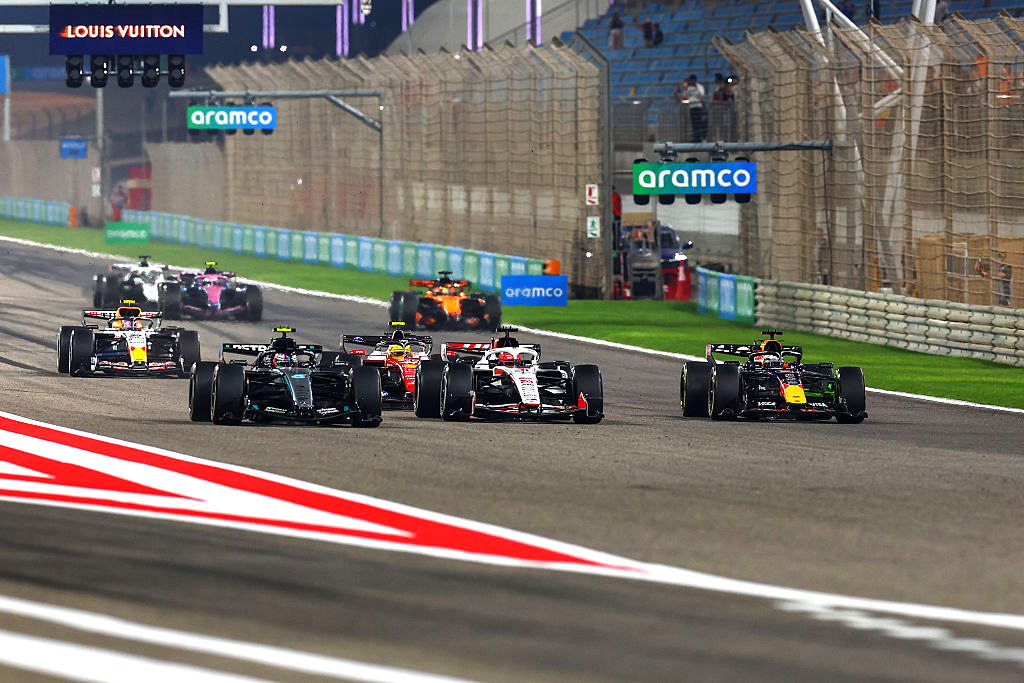
F1 used part of the pre-season to fine-tune start procedures. Joe Portlock/Getty Images
There are other changes that might take longer to be implemented, but that’s unlikely to be the worst move in the world. McLaren team principal Andrea Stella highlighted the potential for drivers lifting and coasting towards the end of straights to be a safety issue, and his team tested being able to super clip (when the MGU-K is generating energy rather than deploying when the driver is still at full throttle) up to the full 350kW rather than the current 250kW limitation.
Doing so, Stella argues, would reduce the need for as much lift and coast, and certainly improve matters on tracks where there is not the same scope for harvesting energy as there is in Bahrain – with a number of instances when drivers are using the brakes to a significant level.
Melbourne, for example, is lighter on the brakes and expected to be tougher from an energy management point of view. But then Shanghai the following weekend will be a different test again, with three hard instances of braking – including a major one into the Turn 14 hairpin that comes at the end of a long straight.
Getting an understanding of how quickly teams adapt to different circuits is one aspect of why the teams and the FIA have not made what the governing body fears could be “premature change” prior to Melbourne. Another is that not only will they adapt to each circuit, with each passing session they will learn more about how to improve the use of their systems in general, and races further down the line will be tackled with greater experience.
It might not be quite the same story when it comes to overtaking, though. Multiple aspects have so far combined to suggest there could be difficulties on that front, given the sensitivity to using energy.
Although drivers have the Overtake Mode available to try and make a pass (and theoretically it should facilitate more overtaking), using it can be so costly for overall race time that they might be reluctant to do so. The DRS, as maligned as it was at times, was free lap time – the rear wing opened and the top speed increased for no additional cost – whereas the Overtake Mode uses energy that needs to be regenerated somewhere.
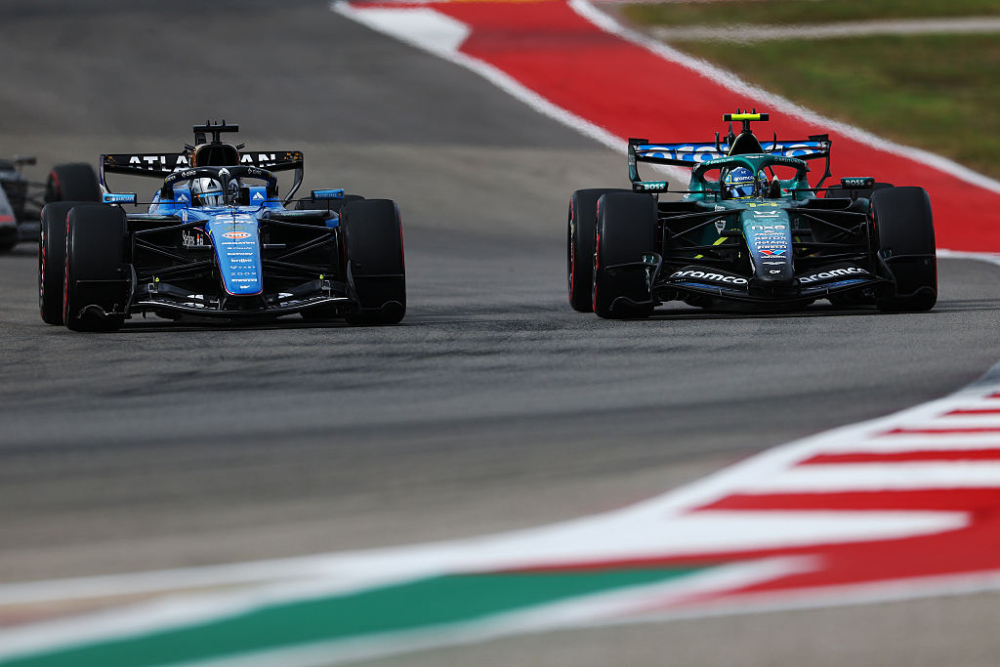
Trying to make a more classic pass also becomes tricky due to the reduced slipstream effect caused by the Straight Mode, when all cars reduce their drag by the front and rear wings automatically changing configuration. Bahrain has often been a track where good racing and overtaking is possible, but the signs from testing have not promoted a huge amount of optimism on that front. Yet it’s again sensible to wait for the opening race weekends to play out, because there was no value to anyone fighting properly during a pre-season test over the past two weeks.
How racing really looks when there are positions and points on the line is yet to be seen, and the impact of the energy situation will also differ track-to-track. Of the first three circuits, Albert Park and Suzuka have traditionally not been great for overtaking, but Shanghai offers greater possibilities.
At the start of a new set of regulations, the need to tweak regulations and improve certain areas is not unusual, and should not be shied away from. F1 and the FIA insist they won’t be afraid to intervene if they need to do so.
But heading into the opening round in Australia, while technical concerns will be front and center, the the biggest uncertainty of relative performance is actually where the most promise sits. New rules also open up the potential for dominance, and yet the pre-season signs were that the top four teams – McLaren, Red Bull, Mercedes and Ferrari – are all matched closely enough to be capable of fighting for wins during the year.
Nobody has shown their full hand, but nobody has had the conviction to put just one team clear of the rest in their predictions. The most common name – Mercedes – may well have an advantage, but for now that impression tends to be backed up by gut feel rather than proven data.
If F1 heads into qualifying in Melbourne with more than one team fighting for pole position, and Sunday dawns with uncertainty over who is most likely to win, then it’s already in a very good position. If all four are in that frame, it’s in a brilliant one.
Arriving at Albert Park, the cars are going to be the most immature and unrefined as they ever will starting a race weekend, and improvement – whether through regulation changes or outright development – can be rapid. What the sport needs more than anything is to be competitive, and for the driver and team combinations to need to make the difference to beat their rivals next Sunday.
If that comes true, you and I watching on will be far less concerned about how much super clipping is happening, or if a corner is being taken in a lower gear than normal.
We can lose ourselves in the minutiae all we want inside the paddock, but the final racing product is the main thing that matters.
Chris Medland
While studying Sports Journalism at the University of Central Lancashire, Chris managed to talk his way into working at the British Grand Prix in 2008 and was retained for three years before joining ESPN F1 as Assistant Editor. After three further years at ESPN, a spell as F1 Editor at Crash Media Group was followed by the major task of launching F1i.com’s English-language website and running it as Editor. Present at every race since the start of 2014, he has continued building his freelance portfolio, working with international titles. As well as writing for RACER, his broadcast work includes television appearances on F1 TV and as a presenter and reporter on North America's live radio coverage on SiriusXM.
Read Chris Medland's articles
Latest News
Comments
Comments are disabled until you accept Social Networking Cookies. Update cookie preferences
If the dialog doesn't appear, ad-blockers are often the cause; try disabling yours or see our Social Features Support.